
Hi, what are you looking for?
By
Published
By Tashi McQueen
Afro
https://afro.com/
As the 47th president works to shutter the U.S. Department of Education (DOE) advocates warn that cuts to the agency’s workforce and programs could harm Americans who depend on the agency’s special education programs.
Since March, DOE has reduced its workforce from 4,133 to roughly 2,183 employees. Nearly 500 additional layoffs within the special education office were attempted in October. While the October layoffs in the Office of Special Education and Rehabilitative Services were reversed by Congress on Nov. 12 through a funding bill to stop the longest federal shutdown in U.S. history, uncertainty remains about the office’s stability and what the upheaval could mean for students who rely on special education services.
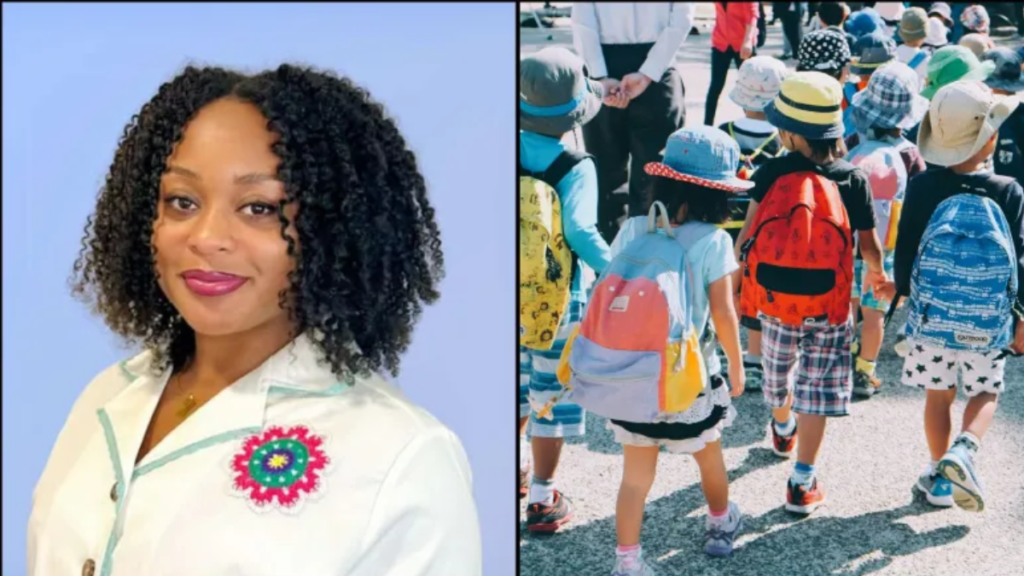
In regards to the layoffs, one speech-language pathologist (SLP), a support service for special education students, reported being disappointed but not shocked. Around 13 percent of SLPs work as special education teachers, according to a 2024 report from the American Speech-Language-Hearing Association (ASHA).
“We have been heading in this direction and I feel like we warned people that these types of things could happen,” said Jordan R. Montique, 30. “The inevitable has occurred.”
Montique said she personally feels the weight of having to step up and advocate for students, ensuring they are getting the services they need despite the changes.
“That weight is heavier for me, and likely other Black SLPs, than it is for non-Black SLPs,” said Montique.
According to ASHA, approximately 92 percent of SLPs are White, while Black SLPs make up around 6 percent.
Montique said she expects the number of Black and Brown students with disabilities who are underserved to rise. She added that this could mean more students are being undiagnosed or misdiagnosed.
Montique pointed out that in a field where there is already a lack of representation for Black people, African-American SLPs can expect to see fewer job opportunities, less support and reduced funding.
“The people who are currently in those positions are going to be overworked and underpaid and suffer burnout,” she told the AFRO.
Montique emphasized the importance of the Individuals with Disabilities Education Act (IDEA), which requires DOE to support students with disabilities through funding, oversight and monitoring of local school compliance. IDEA is overseen by DOE staff. The layoffs this year are expected to significantly weaken the department’s ability to enforce the law.
Before IDEA, when special education regulation was solely left to the states, students with disabilities were not guaranteed the same standards across the country. Without full federal oversight, students could face a reality similar to the pre-IDEA era.
Montique, who is an influencer on social media for speech-language pathologists under the name JRC_theSLP, acknowledged that these cuts may discourage people from entering special education, but she shared encouraging words.
“Don’t let this be like a setback or a drawback to you getting into the field,” she said. “It’s not the end of the world. It’s not the end of the support that we’re receiving currently, we just want to be vocal about it so that we don’t lose that support that we need.”
For students and parents, she encourages continued advocacy.
“You have every right to get everything that you deserve from IDEA and know what your rights are as a parent, as a family, or as a student with a disability,” said Montique. “Those rights are still yours and at this point, it’s on us to speak up and make sure that those checks and balances are still occurring.”

Copyright © 2025 Texas Metro News
About The Author









More Stories
National unemployment rate for Black Americans now the highest its been since 2021 – WCNC
Study: Some Chicago clubs use racist tactics to discourage Black patrons – Illinois News Bureau
COMMENTARY: Black America’s compassionate response to Charlie Kirk’s assassination – Midland Daily News