
Sign up for our free newsletters to receive the latest news from The Observer directly in your inbox.
Join a community that has been informed and inspired for over 60 years. The Sacramento Observer is more than a newspaper; it’s a cornerstone of the community. Your support fuels our ability to deliver high-quality, trustworthy journalism, empowering you and the community.
Your contribution is appreciated. 
The Sacramento Observer
The African American Online Source for California's Capital City
Your contribution directly supports our newsroom.
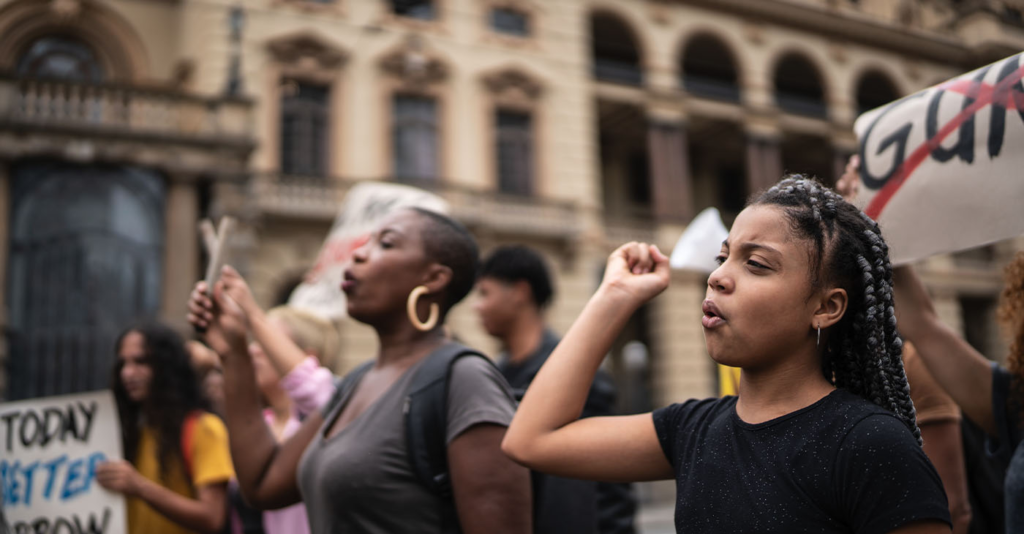
(NNPA) – They called it Shared Chains. The episode ran on the “Blaac718” podcast, and in that dim space between sound and silence, an Asian American man spoke a truth this country has long tried to drown. “I always tell people,” he said quietly, “the day the Latino, African American, Asian, and other communities realize they share the same oppressor is the day we start winning. Because if it wasn’t for the civil rights movement, there would not be 22 million Asian Americans in this country. Your success, your prosperity, your civil rights that you enjoy right now were paid for with Black blood.” There it was. The truth this nation despises most. The truth is that America’s freedom has always been underwritten by the suffering of Black people. That the Constitution itself, written in the ink of ideals and the sweat of enslaved hands, was never worth the paper it was printed on until Black Americans forced it to be.
The Civil Rights Act of 1964 outlawed segregation and discrimination, dragging America closer to its own promises. But that act was not born from goodwill. It was born from the anguish of a people beaten, jailed, and humiliated, who still believed enough in justice to demand it from those who denied them humanity. And when the world began to change, it changed because of them. When President Lyndon Johnson signed the Immigration and Nationality Act of 1965, ending the racist quota system that favored white Europeans, he called it “a triumph for liberty.” But the liberty he spoke of was a harvest planted by Black hands and watered with their blood.
Latino farmworkers marched because Black people had marched before them. Asian Americans found a home because the civil rights movement forced open the nation’s gates. Women, people with disabilities, immigrants from the corners of the globe, all walked through doors built by those who had been shackled.
The Chicano movement, born of frustration and hunger, drew its rhythm from the same drumbeat that sounded in Montgomery and Selma. The Civil Rights Act, meant to crush Jim Crow, became the armor for others—Asian Americans who had been told they did not belong, now shielded by laws created from Black suffering.
“If it weren’t for the Civil Rights Movement, there wouldn’t have been a farmworkers’ movement,” said Vanessa Saplad, a Texas-based registered nurse whose family emigrated from Colombia. “It showed our people that protest could bring power, that dignity wasn’t something you begged for — it was something you stood up and claimed.” Added Michelle Cephus, a D.C.-based accountant and LGBTQ advocate. “The Civil Rights Movement taught us what courage looks like in the face of hate. Stonewall didn’t happen in a vacuum; it happened because people like Dr. King showed us that silence is surrender, and love is an act of resistance.”
And yet, this country forgets. It forgets with a stubbornness that borders on sin. It forgets who gave it its conscience. It forgets that every movement for equality in this land began with the Black demand to be seen as human. It forgets, and in its forgetting, it repeats. “We watched Black folks march for equality, and it gave us language for our own struggles for fair housing, for fair wages, for belonging,” said Peter De Cruz Villareal, a farm worker of Filipino descent. “Their fight taught us how to stand tall, even when the system calls you invisible.” Enrique Vasquez, a Puerto Rico native and D.C. resident, added that, “Every scholarship, every chance to speak my mind, every job that doesn’t question my accent is the echo of the Civil Rights Movement. What started for one group became a promise for all of us.” Donald Trump’s second administration has stripped away the layers of decency this nation once pretended to have. His orders have erased Black history from national institutions, silenced diversity programs, and rolled back protections that once shielded the vulnerable. The cruelty of his immigration policies has reawakened an old truth: that the machinery of oppression never sleeps. It only changes its targets.
But through every betrayal, Black Americans remain this country’s most honest mirror. When others look away, they stand and face the fire. They always have. They did in Montgomery, where a woman sat down so a nation could rise. They did in Selma, where blood mingled with river water to baptize a new generation of freedom fighters. And they did again in the streets of Minneapolis, crying for a breath that belongs to us all. In the final breath of Shared Chains, that same Asian voice spoke again. “Liberty and rights don’t exist forever,” he said. “They exist only as long as we protect them. And if you want them to continue, it won’t be Black people fighting this battle again. You will have to fight it.”
The warning hung in the air like smoke. Because every gain that America enjoys, every inch of justice, every whisper of freedom, was carved from the wounds of those who had nothing left to give but their blood. And the question, the only question that has ever mattered in this nation, still stands: when the fire comes again, who will fight?
“The Civil Rights Movement didn’t just change laws, it changed what we could dream,” said Sybil Morehead, a 67-year-old retired South Carolina teacher. “My students today sit in classrooms that my grandmother could only clean. We’re still fighting, but because of that movement, we’re fighting from the inside now, not from the outside looking in.”
Help The Sacramento Observer continue its 60-year legacy of independent journalism. Your support ensures our mission of creating a more informed world.
Your contribution is appreciated.
The National Newspaper Publishers Association (NNPA), known as the Black Press of America, is the federation of more than 200 Black community newspapers in the United States. More by NNPA

Since its founding on November 22, 1962, The Sacramento Observer has been a central voice for the African American community in Sacramento, across California, and along the West Coast.
Learn More
PICK UP YOUR PRINT EDITION HERE
Sign up for our free newsletter to receive The Observer directly in your inbox every weekday.
Sign in by entering the code we sent to , or clicking the magic link in the email.
By signing up, you agree to our Terms and Conditions. This site is protected by reCAPTCHA and the Google Privacy Policy and Terms of Service apply.
About The Author







More Stories
A $200 million endowment focused on Black Americans is taking shape – AP News
Henry Louis Gates Jr. Explores the Connection and Conflict Between Black and Jewish Americans: ‘A Formidable Force' – People.com
Why Hard Work Doesn’t Pay Off for Black Americans – Medium