

Get the best experience and stay connected to your community with our Spectrum News app. Learn More
Continue in Browser
Get hyperlocal forecasts, radar and weather alerts.
Please enter a valid zipcode.
Save
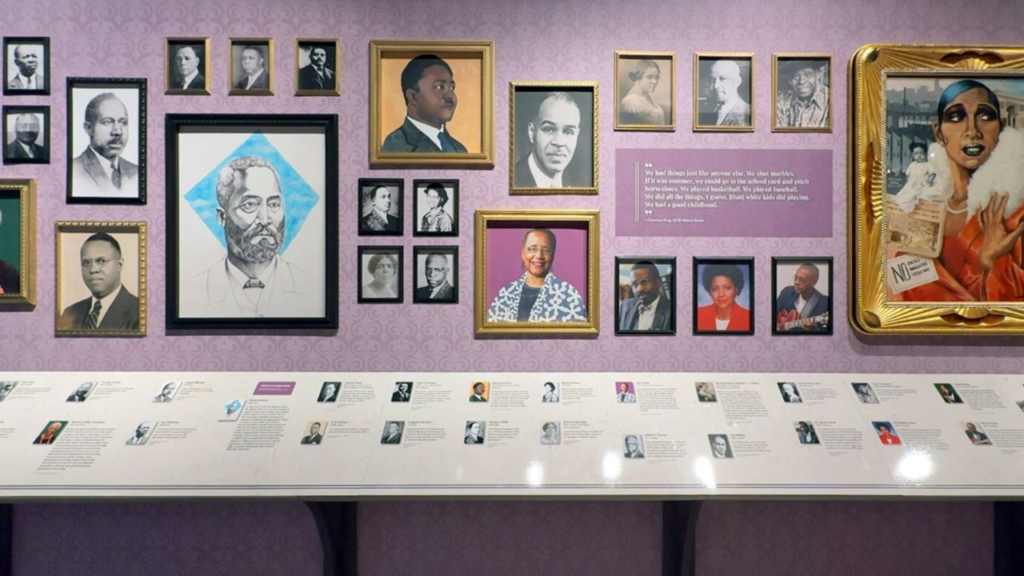
ST. LOUIS — A new exhibit highlighting Mill Creek Valley opens Saturday at the Missouri History Museum. Curator Gwendolyn Moore hopes this will eliminate the negative stigma that surrounded the once-thriving Black community.
She and her sister, Malaika Horne Wells, grew up in Mill Creek Valley. Together over the past few years, formed the “Mill Creek: Black Metropolis” exhibit.
“It was a place that we loved,” Moore said. “We lived in the segregated community. We didn’t go outside that community, so we never really faced racism directly.”
Mill Creek Valley was home to 20,000 residents with more than 800 businesses, seven schools and 43 churches across 454 acres in the city of St. Louis.
This was also where institutions got their start such as the NAACP, the Brotherhood of Sleeping Car Porters, the Specific Movement of the Eastern World, among others.
“It was the center of Black life, and it was the largest concentration of Blacks,” Moore said.
The walkable area was prospering until the late 1950s when it was razed for “urban development.”
“It was a community that was erased; not only erased from the landscape, but erased from public memory,” Moore said. “We couldn’t bring it back, but we could restore it to public memory. And we thought that was important.”
The new “Mill Creek: Black Metropolis” exhibit explores the neighborhood’s history, such as civil rights, civic institutions, jazz, sports, people, education and more. It also showcases never-before-seen images, films and oral histories.
Donated by Horne Well’s husband, Clark Terry Jr.’s horns are among the artifacts in the exhibit. The St. Louis native was a swing and bebop trumpeter, a pioneer of the flugelhorn in jazz, a composer and educator.
Terry played with The Tonight Show Band on The Tonight Show from 1962 to 1972.
“He got that job because of pressure from the Urban League,” Horne Wells said. “He went on to become very wealthy, and he went on to great heights.”
Moore and Horne Wells hope the exhibit will rid the negative stigma that surrounded the Mill Creek Valley.
“During the time of this propaganda against our residents in Mill Creek, we were basically described as slum dwellers. This exhibit will show the public that we were much more than that,” Horne Wells said.
“It just shows you the importance of going deep when you hear information about a group of people and not just believing it at face value because many times there are hidden agendas and motives behind this slur.”
Notable graduates from Vashon High School, which was in Mill Creek Valley, include Rep. Maxine Waters, activist Percy Green, civil rights leaders Norman Seay and Bobby Williams.
“A lot of African-Americans were activists and very much aware of injustice in St. Louis and in the society,” Horne Wells said.
While their parents experienced racism, it was not until after Moore and her sister moved out of Mill Creek Valley that they experienced racism.
“We weren’t that different from anybody else. The only difference is that we were Black,” Moore said.
As people tour the exhibit, Moore said she wants them to have an elevated view of Mill Creek Valley and Black communities overall.
“I want them to start thinking differently about Black communities, period, even today because Black communities are still being stigmatized unfairly.”
For more information about “Mill Creek: Black Metropolis” exhibit, visit the Missouri History Museum website.
About The Author









More Stories
Trump Once Praised the Black History Museum That He Is Now Attacking – The New York Times
A Dutch war cemetery added displays showing black US soldiers. Then they were quietly removed | Netherlands – The Guardian
Black Community Urged to Stand with Immigrants against ICE Crackdown – Davis Vanguard