

For premium support please call:
For premium support please call:
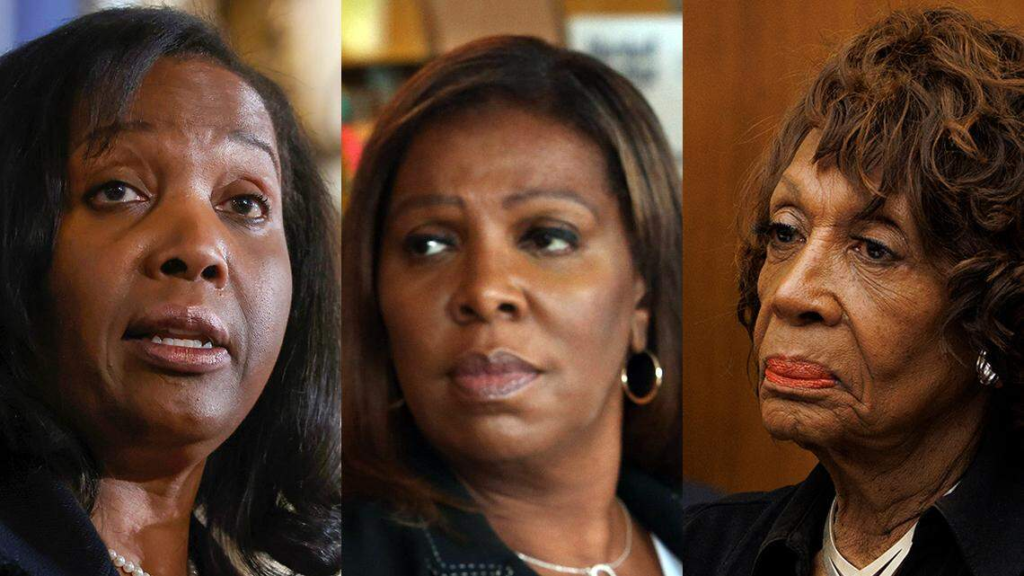
Donald Trump’s public record reveals a consistent pattern: When Black women hold power and challenge him, he responds with insult, delegitimization, or the blunt force of state power. This isn’t mere rhetorical bluster — it’s a calculated playbook that corrodes civic norms, undermines democratic institutions and too often puts specific Black women directly in the crosshairs of political retribution.
Trump’s emotional IQ is in question, but his social skills are not becoming of a commander-in-chief.
The examples are plentiful.
Start with his attempt this week to remove Federal Reserve Governor Lisa Cook, the first Black woman to serve on the institutions’s board. Cook and the Fed are not simply acquiescing to the legally dubious move, with Cook’s lawyer stating that Trump’s “reflex to bully is flawed and his demands lack any proper process, basis or legal authority.”
Or look at New York Attorney General Letitia James, who prosecuted a landmark civil fraud case against Trump, resulting in hundreds of millions in penalties. In response, he repeatedly called her “racist” and now faces federal subpoenas aimed at her office — moves her legal team calls naked political retaliation. Even if blocked in court, the message is clear: Punish the Black woman who beat him in court. That’s not leadership — it’s intimidation by process.
In Georgia, Fulton County District Attorney Fani Willis, who brought a sweeping racketeering indictment against Trump and his allies, became the target of baseless rumors. Trump amplified claims — unsupported by credible evidence — that Willis had an “affair” with a gang member. CNN and fact-checkers debunked this, but the smear stuck. When legal arguments failed, Trump’s orbit leaned into racial grievance, accusing Willis of “racial animus,” stoking tensions and inviting threats against a prosecutor doing her job.
Federal Judge Tanya Chutkan, presiding over one of Trump’s criminal cases, has endured similar attacks. Trump’s public comments questioning her integrity were so inflammatory that a federal court issued a gag order to prevent endangerment of court staff. When a defendant with a massive platform singles out a judge — particularly a Black woman — he undermines the judicial process and fans hostility.
Even Vice President Kamala Harris has been a frequent target. As ABC News and others have documented, Trump has mocked her name, pushed birther-style innuendo and suggested she misled voters about her racial identity. These aren’t policy disagreements — they’re attempts to delegitimize her right to lead.
Trump’s antagonism toward Black women in elected office extends to city halls. He feuded with Washington, D.C., Mayor Muriel Bowser, threatening to deploy federal forces, and falsely claimed that D.C. had “elevated criminal activity” justifying military patrols. In Los Angeles, he’s repeatedly targeted Mayor Karen Bass, using federal criticism to spotlight her city’s challenges — classic punitive federalism aimed at a Black woman governing a major U.S. city.
The pattern stretches back years. In 2018, he called Rep. Maxine Waters “an extraordinarily low-IQ person.” He insulted Black women journalists — April Ryan, Yamiche Alcindor, Abby Phillip — calling Ryan a “loser” and branding Alcindor’s questions “racist.” The National Association of Black Journalists condemned this behavior as a threat to press freedom and journalist safety.
Even Carla Hayden, the first Black woman Librarian of Congress, faced Trump’s hostility, as he suggested her position was unnecessary. More recently, he smeared Rep. Jasmine Crockett as “low IQ,” recycling the same trope he’s used for years against other Black women.
These types of defaulting to name-calling tactics are considered indicators of low social IQ and emotional challenges themselves, according to Psychology Today.
This is not random rhetoric — it’s an intentional strategy to paint Black women leaders as intellectually inferior, emotionally unstable or unfit to serve. The danger extends beyond bruised egos. It erodes the guardrails of democracy. Leadership is tested not by how a president treats allies, but how he responds to those who hold him accountable — judges, prosecutors, mayors, members of Congress and the press. A commander in chief who answers accountability with insults, disinformation and retaliation undermines the very institutions designed to check executive power.
Black women bear this abuse disproportionately. From the courtroom to the newsroom, City Hall to the Capitol, they’ve endured personal insults, threats and professional delegitimization — yet they continue the work. That resilience deserves recognition.
By degree attainment, Black women are the most educated group in America, according to the National Center for Education Statistics and reporting from The Root. So when Trump calls African American women “low IQ,” it’s not just false — it’s a deliberate misrepresentation designed to diminish and demean.
In the end, the pattern says plenty about Trump, but more about the women he targets. They are leaders, guardians of institutions, and public servants committed to the rule of law and the dignity of their offices. His tantrums may grab headlines, but their commitment to service and accountability will outlast any one man’s attempts to tear it down.
Psycholgist Daniel Goleman argues that emotional and social intelligence — skills such as empathy, self-awareness, self-regulation and relationship management — can often predict life success as much or more than cognitive intelligence.
Keep that in mind, Mr. President — respectfully.
Edmond W. Davis is a social historian, collegiate professor, journalist and former director of the Derek Olivier Research Institute. He delivered the keynote address at Junction City, Kansas’ Harmony Fest on Aug. 23.
Advertisement
Advertisement
Advertisement
Advertisement
Advertisement
Advertisement
Advertisement
Advertisement
Advertisement
Advertisement
About The Author








More Stories
A $200 million endowment focused on Black Americans is taking shape – AP News
Henry Louis Gates Jr. Explores the Connection and Conflict Between Black and Jewish Americans: ‘A Formidable Force' – People.com
Why Hard Work Doesn’t Pay Off for Black Americans – Medium