
Date:
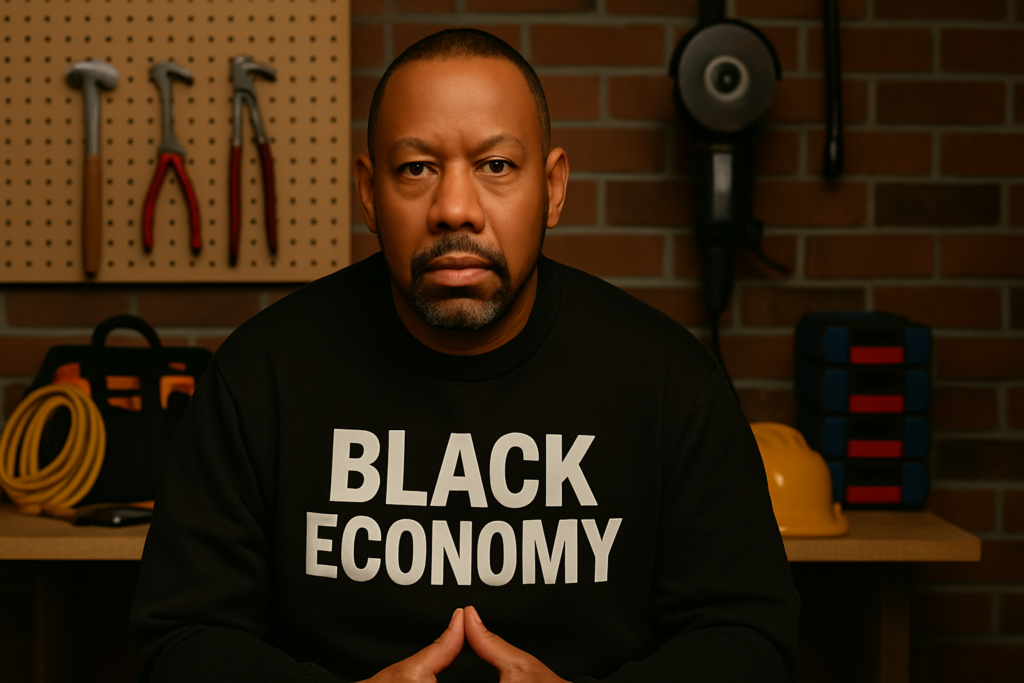
America is facing a labor crisis. Over 800,000 skilled trade jobs—such as electricians, plumbers, HVAC technicians, and construction workers—are currently open and unfilled. These aren’t minimum-wage positions. These are high-paying, high-demand careers that don’t require a college degree—just training, certification, and the willingness to work with your hands.
These are the same kinds of jobs that built the Black middle class.
And yet, we’re not in line to fill them.
Why? Because we gave up the tools—and with them, we gave up the wealth.
There was a time, not long ago, when Black Americans dominated the trades. We built our own homes, churches, and schools. We worked as mechanics, masons, carpenters, and electricians. These trades didn’t just provide income—they built independence. They gave Black families the means to own property, send their children to school, and escape the cycle of poverty.
But then we made a critical mistake. We forgot how the Black middle class was actually built.
Somewhere between the late 1970s and today, we embraced a dangerous message: that skilled labor was inferior. We told our children to aim higher—meaning college—without questioning whether college would offer them a return on that investment. It was Black professionals, educators, and political voices who pushed the narrative that “a degree is the only way out.”
What it led to was predictable: a generation saddled with student debt, holding degrees with no job prospects.
Liberal arts majors with no clear market value. Sociology graduates working in retail. Black youth who were pushed away from trades and into institutions that sold them dreams and handed them bills.
Meanwhile, schools stripped out vocational education. Auto shops were closed. Woodshops were replaced with computer labs. Welding, plumbing, and electrical training vanished from public school curriculums—especially in Black communities.
We didn’t just abandon the trades. We turned our backs on the very engines that built generational wealth.
Today, the U.S. Bureau of Labor Statistics projects the following annual job openings:
Yet we are nowhere near prepared to take advantage of this.
This isn’t just an economic oversight—it’s a strategic failure.
If you can’t build your community, you don’t own your community. If you can’t fix your own infrastructure, you stay dependent. And if your youth are trained for an economy that doesn’t exist, the result is generational stagnation.
We keep asking why we don’t own anything—but the answer is right in front of us: we stopped building.
Meanwhile, immigrant communities are quietly dominating these trades. They’re wiring houses, laying pipes, installing AC units, and walking away with both income and equity—while we stay focused on political symbolism and cultural gestures.
It’s time for a reset.
We must reintroduce trade training in schools. We must organize Black-led apprenticeships, cooperatives, and certification programs. And we must break the stigma that tells our youth that working with your hands is “less than.”
Because in truth, a skilled tradesman can do something many of our so-called “educated” can’t: produce something of value without waiting for permission.
The economy is not biased toward degrees—it is biased toward supply, demand, and competence. Right now, the demand is high. The pay is good. And the opportunity is real.
If we don’t respond to that, we won’t just be poor—we’ll be obsolete.
This is The Black Economy, and this is the bottom line:
When we gave up the tools, we handed over the wealth. But it’s not too late to pick them back up.
Share post:
Black 2 Business
Latest Posts
The publication provides coverage of local events, politics, culture, and issues particularly relevant to African American residents. With a commitment to amplifying Black voices and perspectives, Black Westchester Magazine aims to inform, empower, and connect its readership through in-depth reporting and community engagement.
© 2021 tagDiv. All Rights Reserved. Made with Newspaper Theme.
About The Author






More Stories
7 moments of Asian American and Black American solidarity – Iosco County News Herald
7 moments of Asian American and Black American solidarity – Nonstop Local News Montana
7 moments of Asian American and Black American solidarity – swiowanewssource.com