

Milwaukee Community Journal
By Leave a Comment 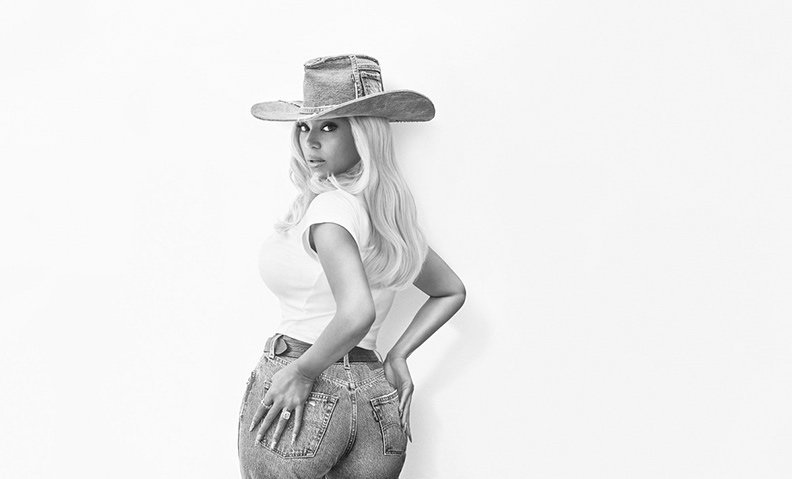
Dr. Allison Wiltz,
article courtesy of Medium.com
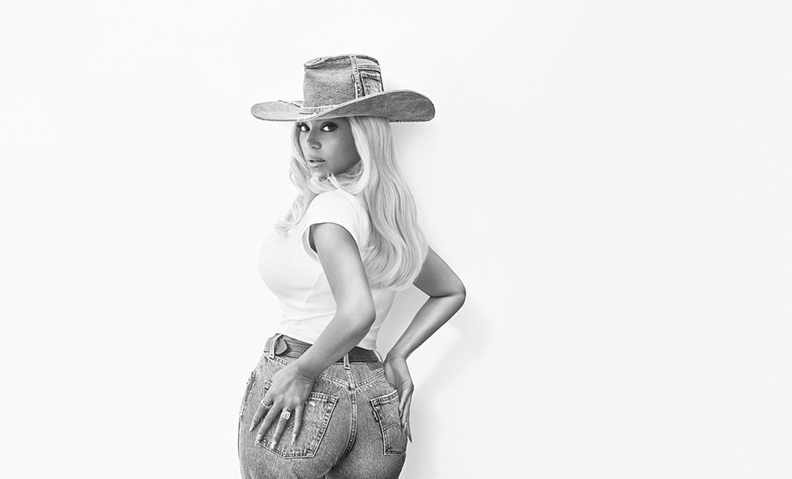
According to British media personality Piers Morgan, Beyoncé featured in a Levi’s ad wearing a two-piece jean fit with platinum blonde hair, is a case of cultural appropriation
He claimed she was trying to mimic Marilyn Monroe, born as Norma Jeane Mortenson. Of course, this is ironic given the model in question famously dyed her hair to achieve that blonde bombshell look — she originally had light brown hair. It’s also peculiar to see Marilyn Monroe used as an example because of her political leanings.
Historian Lois Banner described her as having a “populist vision of equality for all classes.” She befriended Ella Fitzgerald, the queen of jazz, and in a show of support, contacted the owner of the Mocambo nightclub in West Hollywood.
This opened the door for her to secure bookings at larger venues. As a result of these efforts, Marilyn wouldn’t likely approve of Piers Morgan using her image in this way.
Despite her personal views on racial equality, her image has become popularized in some circles, for all the wrong reasons. However, to the main point of this article, Beyoncé is not guilty of cultural appropriation.
First and foremost, there is no valid claim that she was trying to copy someone else’s style, let alone their culture.
Sure, Marilyn Monroe can be seen wearing platinum blonde hair in many photos, but donning a full blue jean fit bedazzled with diamond-like glam, as Beyoncé did in some scenes, is not exclusive to White women. Indeed, it’s been popularized in the black community.
Furthermore, while the trait is rare, some Black people are born with naturally blonde hair. When Piers Morgan claimed he was “very disappointed to see Beyoncé culturally appropriating Marilyn Monroe,” he was emphasizing her race, claiming her blackness disqualified her from having blonde hair, or choosing to don a lightened style.
But the irony wasn’t lost on many that he pointed to an example of a White woman who dyed her hair as the epitome of authenticity.
Also, this criticism is rooted in a false premise that any group is capable of cultural appropriation. However, that’s not how this works.
Cultural appropriation occurs when members of a dominant group adopt elements of a marginalized group’s culture without considering its significance within that community. They often mock something meaningful to that group. There is no evidence that Beyoncé dyed her hair with the intent to mock others.
She has worn this style for over twenty years, making it a signature part of her brand. Beyoncé has previously expressed pride in her identity as a Black woman, not an affinity for whiteness.
People are entitled to dislike her hair color, but claiming she is guilty of cultural appropriation is simply inaccurate. Coming from a British, White man, that critique is especially absurd. If you’re looking for a real example of cultural appropriation, look no further than White Americans dressing up in Indigenous regalia as Halloween costumes—that’s the real deal.
Black people enslaved under colonial rule were prohibited from speaking their original African languages, and in most cases, from reading and writing. They were put in a position where they had to adopt elements of European culture, their languages, religious practices, and traditions just to survive.
Given this historical context, it’s rather short-sighted that any White man would accuse a Black American and others living throughout the diaspora of cultural appropriation.
“members“Cultural appropriation occurs when members of marof a dominant group adopt elements of a marginalized consideringginalized group’s culture without considering its Theyits significance within that community. They often thatoften mock something meaningful to that group. Beyoncégroup. There is no evidence that Beyoncé dyed her hair with the intent to mock others.”
Chattel slavery forced Black people to adopt elements of European culture. How can anyone credibly accuse them of co-opting something that was shoved down their throats for generations?
In America, many enslaved African people mixed with Europeans during the chattel slavery era. This wasn’t typically consensual, as historians have recorded high instances of rape and exploitation, but in the case of Beyoncé’s Louisiana Creole ancestry, it reportedly was a love match.
Her great-great-great-grandmother was an enslaved woman named Joséphine Célestine Lacy, born during the 1800s. She married Joseph Lacey, a successful White merchant.
While children born to enslaved mothers were automatically considered slaves, their daughter, Celestine “Tine” Lacey (1830), became free. She was liberated by a White farm worker with whom she had children, Eloi Rene Rosmand Broussard.
While the Confederacy prohibited abolition, he argued “their arrangement predated Louisiana’s secession from the union,” and was legally binding as a result. Her ancestry exposes the fallacy of biological race.
It’s sad, but racism persists in the international community, so much so that there’s an effort to “other” Black people, to cast them as perpetual outsiders.
We saw this in the response to Beyoncé releasing an award-winning country album, when some in the industry were hesitant to embrace her project. Since she wasBlack, many felt her songs didn’t belong in the countrygenre.
Despite enslaved Africans playing a critical role in thedevelopment of the guitar, a key instrument that givesthe genre its sound, some believe White people haveexclusive rights to this kind of music, the same way PiersMorgan thinks blonde hair is a color only to be worn byWhite women.
His comment seems to be driven by an exclusionaryworldview, one that deems some more worthy of self-expression than others.
Some seem to forget that there is no such thing asAmerican culture without Black people. Our ancestorswere enslaved here before the colonies joined as onenation, as early as 1526 in Spanish-controlled coloniesand 1619 in British-controlled colonies. Indeed, there aremany White Americans who descend from immigrantswho travelled here after this became a nation.
The only reason they see themselves as more worthyculture bearers is because of racism. While Beyoncéhas made some cultural faux pas in my opinion, such aswearing the yellow Tiffany diamond with ties to the minein Kimberley, South Africa known for human rightsabuses, praising the Buffalo Soldiers without consideringtheir role in displacing Indigenous people, or paradingthe American flag around while avoiding critical discussions about the harm this nation has perpetuated, sheis not guilty of cultural appropriation.
Indeed, her heritage reveals someone who has just asmuch of a right to celebrate African and Black culture asshe does American culture more broadly. If she wants towear blonde hair, she has every right to do so.
The country’s third president, Thomas Jefferson, onceclaimed Black people were incapable of artistic expression.
He said, “misery is often the parent of the most affecting touches in poetry. — Among the blacks is miseryenough, God knows, but no poetry.” Of course, this wasn’t true, but Jefferson was parroting a legitimizing myth.
Enslavement stripped them of their original languages,their right to read and write — this is what temporarilystrained their artistic expression, not their capacity, ashe racistly implied. Black Americans created the musicalgenres of jazz, blues, soul, funk, gospel, hip-hop, andbecame influential in country and rock-and-roll.
They’ve written books of poetry and prose, and created art of every kind. Today, Black Americans are some of the most critically acclaimed, brilliant artists, far removed from the racist myths promoted in the past.
As members of the dominant racial group in America, White people are not victims of cultural appropriation. A Black woman wearing blonde hair isn’t a “gotcha” moment for anyone who knows the true meaning of the term.
While some will surely claim these discussions don’t matter, that there are more pressing things happening in the world right now than Piers Morgan criticizing yet another Black woman for simply existing.
But it matters that White people are progressively employing false equivalencies as a cover for their racism. When Black girls wear natural hairstyles, they are more likely to face suspension from school, and Black women who embrace these styles are less likely to be hired for positions.
When White girls and women try to adopt these styles, this is real cultural appropriation we should be talking about. They’re making light of the discrimination Black people endure when they celebrate their culture.
On the other hand, women of all races and cultures lighten their hair. It’s not something exclusive to White women, or even American women, for that matter. Marilyn Monroe and Beyoncé both dyed their hair.
The fact that Piers Morgan is only accusing one of cultural appropriation exposes the truth — this isn’t about authenticity, it’s an effort to pressure a Black woman to change her style, to appease their white fragility.
Needless to say, they shouldn’t hold their breath expecting a Black woman to cave to their racist critique.
References
Castelli, L., Zogmaister, C., & Tomelleri, S. (2009). The transmission of racial attitudes within the family. Developmental Psychology, 45(2), 586–591. https://doi.org/10.1037/a0014619
DeAngelis, R. T. (2024). Systemic Racism in Police Killings: New Evidence From the Mapping Police Violence Database, 2013–2021. Race and Justice. https://doi.org/10.1177/21533687211047943
FBI hate crimes statistics. Community Relations Service. (2025, January 29). https://www.justice.gov/crs/news/2023-hate-crime-statistics#:~:text=Race%2DBased%20Crimes%3A%20Hate%20crimes,highest%20racial%20or%20ethnic%20category.
FBI Crime Data Explorer. (n.d.-a). Hate Crime in the United States Incident Analysis. https://cde.ucr.cjis.gov/LATEST/webapp/#/pages/explorer/crime/hate-crime
Florido, A., Lim, M., & Handel, S. (2022, February 7). How black activists used lynching souvenirs to expose American violence. NPR. https://www.npr.org/2022/02/07/1078930036/how-black-activists-used-lynching-souvenirs-to-expose-american-violence
Foster, T. (2024, May 3). Sexual exploitation of the enslaved. Encyclopedia Virginia. https://encyclopediavirginia.org/entries/sexual-exploitation-of-the-enslaved/
Glover, A. (2022, October 8). The real story behind Marilyn Monroe and Ella Fitzgerald’s friendship. Freeze Frame: The real story behind Marilyn Monroe and Ella Fitzgerald’s friendship — 9Celebrity. https://celebrity.nine.com.au/latest/freeze-frame-truth-behind-marilyn-monroe-ella-fitzgerald-friendship/3ac1fb7b-1ec4-41e4-80c4-a5f7802b2dd7
Jones, C. (2023, October 3). Documentary recounts lynching of Black Man in Broward County. CBS News. https://www.cbsnews.com/miami/news/documentary-recounts-lynching-of-black-man-in-fort-lauderdale/
Koval, C. Z., & Rosette, A. S. (2021). The Natural Hair Bias in Job Recruitment. Social Psychological and Personality Science. https://doi.org/10.1177/1948550620937937
Landry, C. (2019a, January 28). Beyoncé Knowles: Myths, Acadian & African ancestors. Louisiana Historic and Cultural Vistas. https://www.mylhcv.com/beyonce-myth-debunking-and-new-revelations-on-her-familys-fascinating-history/
McGloin, C. (2024, November 5). Rubin Stacy: Lynched, Florida 1935: CRRJ. The Civil Rights and Restorative Justice Project | at Northeastern University School of Law. https://crrj.org/efforts/rubin-stacy-lynched-florida-1935/#:~:text=Rubin%20Stacy%2C%2030%2C%20was,custody%2C%20hung%20and%20shot%20him.
Mumphrey, C., & Lozano, J. (2023a, October 25). A black student was suspended for his hairstyle. The school says it wasn’t discrimination. AP News. https://apnews.com/article/hairstyles-dreadlocks-racial-discrimination-crown-act-034a59b9f2652881470dc606b39e5243
Ponder, J. (n.d.). 1955: The truth about that famous photo of Marilyn Monroe and Ella Fitzgerald. West Hollywood History. https://www.westhollywoodhistory.org/playground-to-the-stars/the-truth-about-that-famous-photo-of-marilyn-monroe-and-ella-fitzgerald/
Report: Black people are 7.5 times more likely to be wrongfully convicted of murder than whites, and the risk is even greater if the victim was white—death Penalty Information Center. (2025, March 14). https://deathpenaltyinfo.org/report-black-people-7-5-times-more-likely-to-be-wrongfully-convicted-of-murder-than-whites-risk-even-greater-if-victim-was-white
Rothman, L. (2016, June 1). Marilyn Monroe at 90: Her forgotten radical politics. Time. https://time.com/4346542/radical-politics-marilyn-monroe/
Ruba, A. L., McMurty, R., Gaither, S. E., & Wilbourn, M. P. (2022). How White American Children Develop Racial Biases in Emotion Reasoning. Affective Science, 3(1), 21. https://doi.org/10.1007/s42761-022-00111-y
Filed Under: Arts & Entertainment, Black History, Culture
Your email address will not be published.

The Milwaukee Community Journal (MCJ) and the Weekend Edition are distributed at a number of community churches; as is the current issue of Healthy Start. With many area churches closed for the next few weeks due to the coronavirus, your MCJ suggests you pick up your edition of the newspaper, Weekend Edition and Healthy Start at our offices, located at 3612 N. Martin Luther King Drive. We’re open from 10 a.m. to 4:30 p.m., Monday through Friday. You can still pick up the MCJ at several Walgreens and Pick n’ Save stores throughout the community, as well as city hall and the county courthouse.
Place your notice of divorce, name change, etc. in the Milwaukee Community Journal’s Classifieds! Contact is at 414-265-5300
Copyright © 2025 Milwaukee Community Journal
About The Author







More Stories
Black Chicagoans embrace the quarter-zip trend while discussing its meaning – Chicago Sun-Times
As The ‘Quarter Zip’ Gains Popularity, Chicagoans Debate Trend’s Impact On Black Men – Black Enterprise
Ohio’s Black-owned Clearview Golf Club Celebrates 80 Legendary Years as ‘America’s Course’ – EURweb