
There’s pressure to devalue work that centers Black people, our history, and our experiences. But we know our stories matter — and Capital B won’t stop telling them.
Our three-year plan helps us ensure we can continue to tell these stories well into the future. We’re raising $35,000 to keep our newsroom strong, and every gift today will be doubled through a matching grant.
Join us in shaping the future of Black news!
“I am so proud to be part of Capital B. It’s what journalism needs to be.”
— Joan, Capital B Member
Get the biggest stories of Black America delivered to your inbox each week for free. Sign up for our national newsletter Seen & Heard now!
With our free newsletter, Seen & Heard, you can get the biggest stories of Black America delivered to your inbox each week.
Get the biggest stories of Black America delivered to your inbox each week for free. Sign up for our national newsletter Seen & Heard now!
Sign up for Capital B’s free weekly newsletter to get the untold stories of Black America in your inbox:
Capital B News
Get our free politics and culture newsletter delivered to your inbox every other Thursday.
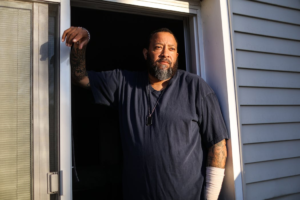
Rod Sias remembers how deeply hurt he was when Louisiana lost its second majority-Black congressional district in the 1990s.
Because of a federal court ruling, the 56-year-old Opelousas resident said, Black Louisianans were denied an opportunity to elect another U.S. representative who might advocate for them in Congress. Cleo Fields, the representative who had been redistricted out of office, had directed federal dollars to improving the mostly Black city’s water system, Sias said.
Black Louisianans might be in for a repeat, he fears. The state’s congressional map was redrawn to include a second majority-Black district and comply with a 2023 U.S. Supreme Court decision that found that a similarly unrepresentative map in Alabama likely violated the Voting Rights Act of 1965. The 60th anniversary of the law’s passage was this month. And this coming year, the court will decide whether taking race into account when designing a map is a violation of the Constitution.
The battle in the Bayou State comes as Texas enacts a new congressional map of its own. The new map, promoted by President Donald Trump, is expected to give the Republican Party five more seats in the U.S. House. Advocates say that the map will dilute Black and brown voting power.
Texas House Democrats used every tool at their disposal, including fleeing the state, to try to block this redistricting from taking place outside the standard 10-year cycle. But the Texas State Legislature still passed the map.
The Louisiana case and the Texas redistricting change are just two examples illustrating the growing uncertainty around Black access to the ballot box. This concern has been growing since 2013, when the Supreme Court, in a landmark case, gutted a section of the Voting Rights Act that prevented states with histories of discriminating against Black voters from changing their maps or enacting new election laws without first getting federal approval, or “preclearance.”
“I think that the old map was fundamentally unfair, and the epitome of systemic racism,” Sias told Capital B. He was referring to how, before the map was redrawn, only one of Louisiana’s six congressional districts was majority Black, even though the state’s voting-age population is 33% Black.
“Everybody deserves responsive and accountable leadership,” he continued. “Because it has a ripple effect: It can help to increase health care access. It can help to remedy disparities in education. It can help to improve infrastructure.”
Since the court weakened the federal oversight requirement, many states have passed restrictive measures, from unrepresentative voting maps to narrow voter ID requirements. An analysis from the Brennan Center for Justice gives a few figures: At least 31 states have passed 115 restrictive voting laws since the 2013 decision — this includes at least 44 laws in states that once needed the federal green light.
Additionally, Trump this month threatened to sign an executive order getting rid of mail ballots and voting machines ahead of the 2026 midterm elections. The Constitution gives presidents no authority to do so.
“There are all of these issues percolating around the Voting Rights Act,” said Valencia Richardson, legal counsel for the Campaign Legal Center’s voting rights division. “And they raise these existential questions about the future of the greatest voting rights legislation this country has ever passed.”
Jarvis Dortch, the executive director of the ACLU of Mississippi, noted that it’s a future that’s increasingly bleak without a renewed commitment from lawmakers and the courts to protect the voices of marginalized groups at the ballot box.
The Jackson native told Capital B that the array of issues beleaguering Black voters ought to be evidence that the Voting Rights Act is no less essential today than it was 60 years ago.
“Some states don’t voluntarily correct past problems,” Dortch said. “If you don’t correct those problems, they continue to exist — even if the racism isn’t as blatant as it used to be.”
Here are what experts and advocates say are three of the greatest challenges facing Black Americans’ right to vote.
Richardson, of the Campaign Legal Center, told Capital B that there are a number of redistricting attempts that have been made possible only because of the 2013 decision, known as Shelby County v. Holder.
In August 2024, the full U.S. Court of Appeals for the Fifth Circuit ruled that Black and Latino voters in Galveston County, Texas — the birthplace of Juneteenth — can’t sue as a coalition district. These districts allow marginalized groups that reside in the same area, share similar histories of discrimination, and make up a majority within that district to elect political candidates who might best represent their interests.
“They’re basically trying to strip away our power, to take away our seat at the table,” Lucille McGaskey, a Galveston County resident and community leader, previously told Capital B.
In May 2024, the U.S. Supreme Court decided in favor of Republicans in a case involving South Carolina’s congressional map. The conservative majority upheld the GOP-friendly map, saying that a partisan gerrymander is legal, even though a lower court found earlier that the map had caused “the bleaching of African American voters” from a district.
“Basically, they can racially gerrymander as long as they throw a party label in there and say, ‘We aren’t doing this because they’re Black. We’re doing it because they’re Democrats,’” Cliff Albright, the co-founder of Black Voters Matter, told Capital B. “And that’s apparently supposed to make it OK.”
This was the first time since the 2013 decision that Texas and South Carolina didn’t have to prove that the changes to their maps wouldn’t result in racial discrimination.
In the more than a decade since that change, Albright added, there’s been a “flood of attacks” on the right to vote, including unrepresentative maps. And he worries, he said, about the toll it will take on Black communities — how an entire process might be delegitimized in some people’s eyes and result in a form of self-suppression.
“The immediate effect is that it keeps people or whole communities from voting, but I also wonder what these attacks do psychologically when it comes to people being motivated to vote,” Albright said. “When we go out there to get people to vote and they tell us, ‘My vote isn’t really going to count,’ I can’t tell them that they’re making that up because they see what’s happening — there’s truth to that.”
Another area where voting rights are being undermined, according to Richardson, involves voter assistance.
Following the 2020 presidential election, Trump contended, without evidence, that he was cheated out of the victory, and he unsuccessfully attempted to overturn the race. Since then, a number of officials from states that once needed federal approval have sought to place restrictions on voter assistance.
In May 2024, Louisiana Gov. Jeff Landry signed a law that makes it illegal to help more than one person fill out, mail, or witness an absentee ballot unless those offering assistance are part of that person’s immediate family. Caregivers at group facilities, including nursing homes, could face criminal penalties for aiding patients with their ballots.
Similarly restrictive laws exist in many former Confederate states.
“Alabama has maybe the worst absentee ballot application assistance restriction in the country, with criminal penalties of up to two decades in prison,” Richardson said.
She was referring to a law that Alabama Gov. Kay Ivey signed in March 2024. Though a federal judge blocked a portion of the measure last year, it still punishes people with up to 10 years in prison if they knowingly receive payment for “distributing, ordering, requesting, collecting, completing, prefilling, obtaining or delivering” an absentee ballot application.
The law also punishes people with up to 20 years in prison if they knowingly pay or provide a gift to a “third party to distribute, order, request, collect, prefill, complete, obtain or deliver.”
The NAACP Legal Defense and Educational Fund and other civil rights groups sued Alabama in April 2024 in an effort to prevent the law from going into effect. They argued that volunteers could be punished for something as innocuous as passing out a sticker to their neighbor.
“[The law] is something that I’m really not sure could have happened if Alabama had still been subject to preclearance,” Richardson said. “It so impacts minority voters, particularly in the Black Belt, who receive assistance in voting because they’re elderly or have a disability.”
The widespread lack of oversight at polling locations in many states is another significant problem, Richardson said.
Mississippi, she continued, has had major issues with polling place access that have only gotten worse since the 2013 decision.
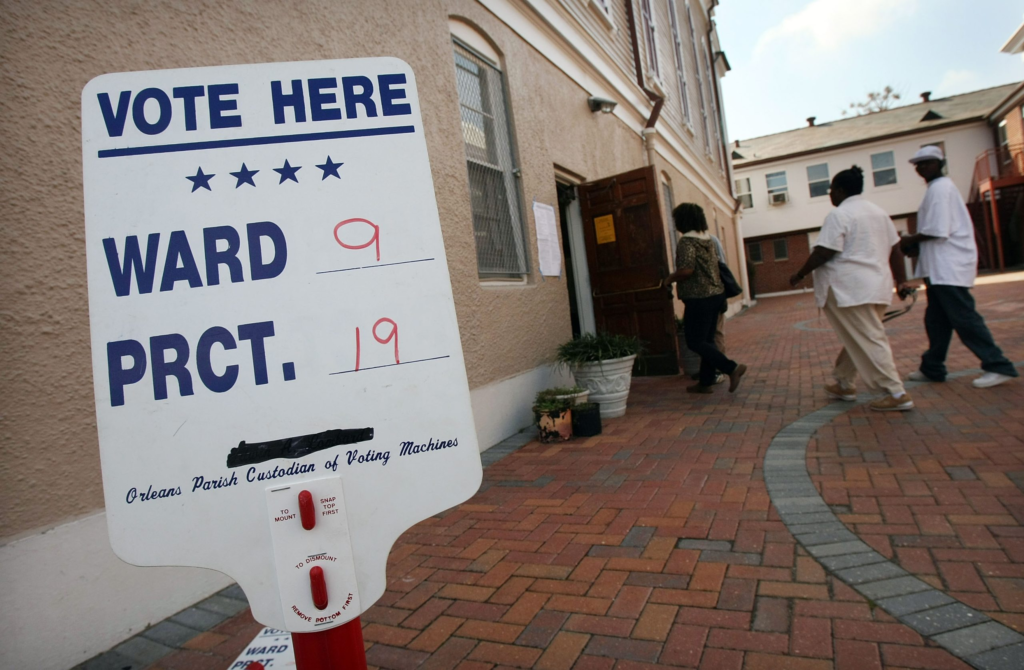
In November 2023, during the state’s most competitive gubernatorial race in years, some polling places in Hinds County ran out of ballots. People had two choices: They could either wait for the ballots to be replenished, or they could leave without voting. Located in the state capital of Jackson, Hinds is the largest county in Mississippi, and is approximately 73% Black.
“It’s frustrating, and it sort of makes you feel like something was being rigged or something,” Otis Wells, a Black resident who waited for about an hour to vote with his wife, told the Associated Press at the time.
A similar problem occurred in Louisiana this past June. Some voters were turned away in a rare special election for a seat on a state conservation board because there weren’t enough ballots in parts of majority-Black New Orleans and its suburbs.
These are the sorts of issues that would have been subject to federal approval so that Black voters don’t fall through the cracks, Richardson said.
One of the benefits prior to the 2013 decision was that there was oversight of things such as polling place restrictions, “which are incredibly decentralized decisions — they usually happen at the county level,” Richardson added.
“Spotting issues before they happen is like playing Whac-A-Mole,” she said, noting that federal oversight “allowed us to stop those changes before they had a discriminatory impact. But that has gone away — just totally gone away.”
Sias, the Opelousas resident, echoed some of Richardson’s sentiments. He underscored that he doesn’t have much confidence that the voting rights landscape will improve on its own. But he explained that he does have faith in the potential of people to join together and topple the obstacles standing in their way.
“We’re fighting for basic democracy,” he said. “And it’s going to take a coalition of good people to save it. I have some hope that people will come together and beat these forces back.”
Capital B staff writer Aallyah Wright contributed to this report.
We’re seeing some of the most powerful forces in the media – from conglomerate CEOs to billionaire owners – putting their business interests before their newsrooms’ editorial independence. There is a concerted effort at the highest levels of government to erase or sanitize the country’s racial history, and to intimidate those who dare to acknowledge or support the unique needs of different communities in America.
I want to be clear: We will not be intimidated. And I hope you won’t either. At its core, journalism is a discipline of courage and confrontation. This is what we were built for. Our journalism is independent. Our work is absolutely necessary to fill the gaps in information access and news trust in our country. We know this because we’re in our communities every day, listening to folks tell us why they trust what we report and how we offer news they can’t get anywhere else.
We’ll never back down from our mission and we aren’t scared of a fight — but the biggest danger we face in this environment is that we won’t get the support we need to keep going and growing.
We’re inviting our community of readers, partners, and believers to join us as we enter this new chapter. Your support will help us sustain this vision and prove what’s possible when journalism serves with purpose and courage.
—Lauren Williams, Co-founder & CEO
Your donation will make an immediate difference.
Brandon Tensley is Capital B's national politics reporter. More by Brandon Tensley
Capital B is a Black-led, nonprofit local and national news organization reporting for Black communities across the country.
About The Author






More Stories
Why Hard Work Doesn’t Pay Off for Black Americans – Medium
NAACP launches town halls to mobilize Black voters ahead of 2026 midterm elections – CBS News
America’s New Africa Strategy Isn’t New — It’s Just More Honest – Black Westchester